
- TaoufikAmri
- July 12, 2020
- 1:25 pm
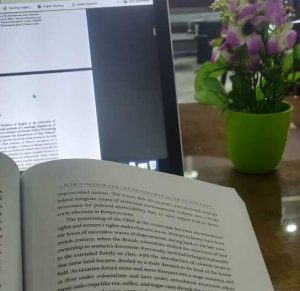
A glimpse into my master's journey
Green Cultural Studies
“Climb the mountains and get their good tidings. Nature’s peace will flow into you as sunshine flows into trees. The winds will blow their own freshness into you, and the storms their energy, while cares will drop away from you like the leaves of Autumn.”
― John Muir, The Mountains of California
My journey
As a child, I remember how connected I was to nature. I would go out with my friends to explore and enjoy getting ourselves dirty by climbing small trees and rocks, jumping in puddles and picking things up. This connection, however, is more tenuous as we grow up and become individuals belonging to a different world from ours. We become part of a constructed society that enforces certain beliefs, cultures, languages and many other constituents that define us as citizens.

What I am trying to convey is that we become less connected to nature or probably not connected at all. To exercise and re-experience the spontaneity and connection one has to look for the real nature outside or in novels, books, and poems that speak of the beauty of the non-human world. By non-human, I mean all that is not related to, appropriate to, or produced by humans. Nature has always fascinated us since the dawn of time. Many writers, poets, and philosophers have sought refuge in the natural world to experience the power and beauty of nature and to eventually write about it. My connection to nature, I must admit, revived once I have started my journey pursuing an MA in Green Cultural Studies. Green Cultural Studies Master’s degree investigates Ecocriticism which is an approach that tackles the study of literature and environment from an interdisciplinary point of view where all sciences come together to analyse the environment and brainstorm possible solutions for the correction of the current environmental situation.
Moreover, it is a field of study that provides a deep understanding of the relation between literature and the physical environment. As Glotfelty and Fromm 1996 (cited under Collections of Essays) famously state: “ecocriticism takes an earth-centred approach to literary studies,” rather than an anthropomorphic or human-centered approach. (p. xviii).
One of the main objectives of Green Cultural Studies is to study the bond existing between the human and non-human in an attempt to analyse, investigate and reflect on the status of nature as part of our identity. Throughout the first semester, we have tackled different schools of criticism which have gained a lot of attention in recent years due to higher social emphasis on environmental destruction and technology development. It is hence through analysing and interpreting literary texts, we may bring new dimensions to the field of literary and theoretical studies. Green Cultural Studies is an intentionally broad field of study that encompasses a number of other designations, including “ecocriticism”, “ecopoetics”, and “environmental literary criticism.”.
